Perception Management Inside the So-Called 9/11 Truth Movement
How Dr Judy Wood's terminology became the focus and her EVIDENCE did not,


Dr Judy Wood does appear to use unusual language when presenting the evidence she has collected regarding the destruction of the WTC on 9/11. However, there is a reason for this and I thought I would go into why she does this and why it is actually quite clever.,
Dr Judy Wood’s Unusual Language and Why She Uses it.
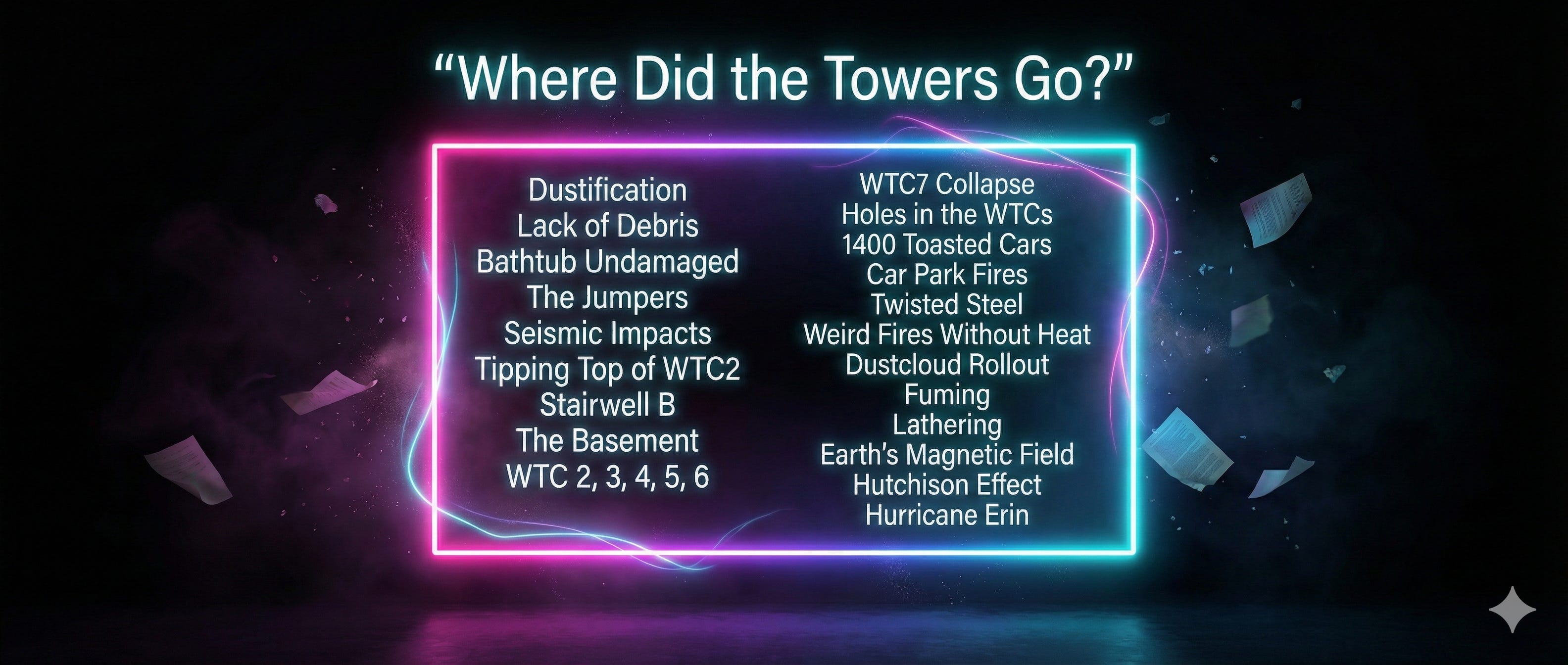
When people first come across Dr Wood, they often think the same thing - ‘Why does she use such strange words?’, for example Dustification, Toasted, Lather, Rolled up Carpets.
These words get mocked and once they are mocked a lot of people stop there and they never look at the evidence that those words are describing.
Dr Wood uses unusual language for a very simple reason, normal words already tell you what to think. When you hear words like collapse, fire, debris or explosion, your brain fills in the rest automatically. These words were repeated on the news over and over again to the point you didn’t even realise you have accepted a conclusion.
Dr Wood avoids those words on purpose.
Instead of telling you why something happened, she sticks to what can actually be seen. What the buildings did. What the steel did. What the dust did etc.
‘Dustification’ doesn’t explain a cause but it describes what we can see, buildings turning into extremely fine dust with much of the material simply missing.
‘Toasted’ doesn’t mean burned but it describes cars that were damaged in strange selective ways that don’t behave like normal fire damage.
‘Lather’ avoids the assumption that we are looking at smoke, it describes how material rolled out of buildings in thick, frothy clouds instead of rising like smoke normally does.
‘Rolled-up Carpets’ is exactly what some steel beams look like, not snapped, not buckled but curled and twisted.
These words stop you from mentally jumping ahead to an explanation and force you to look first. This is why they make people uncomfortable.
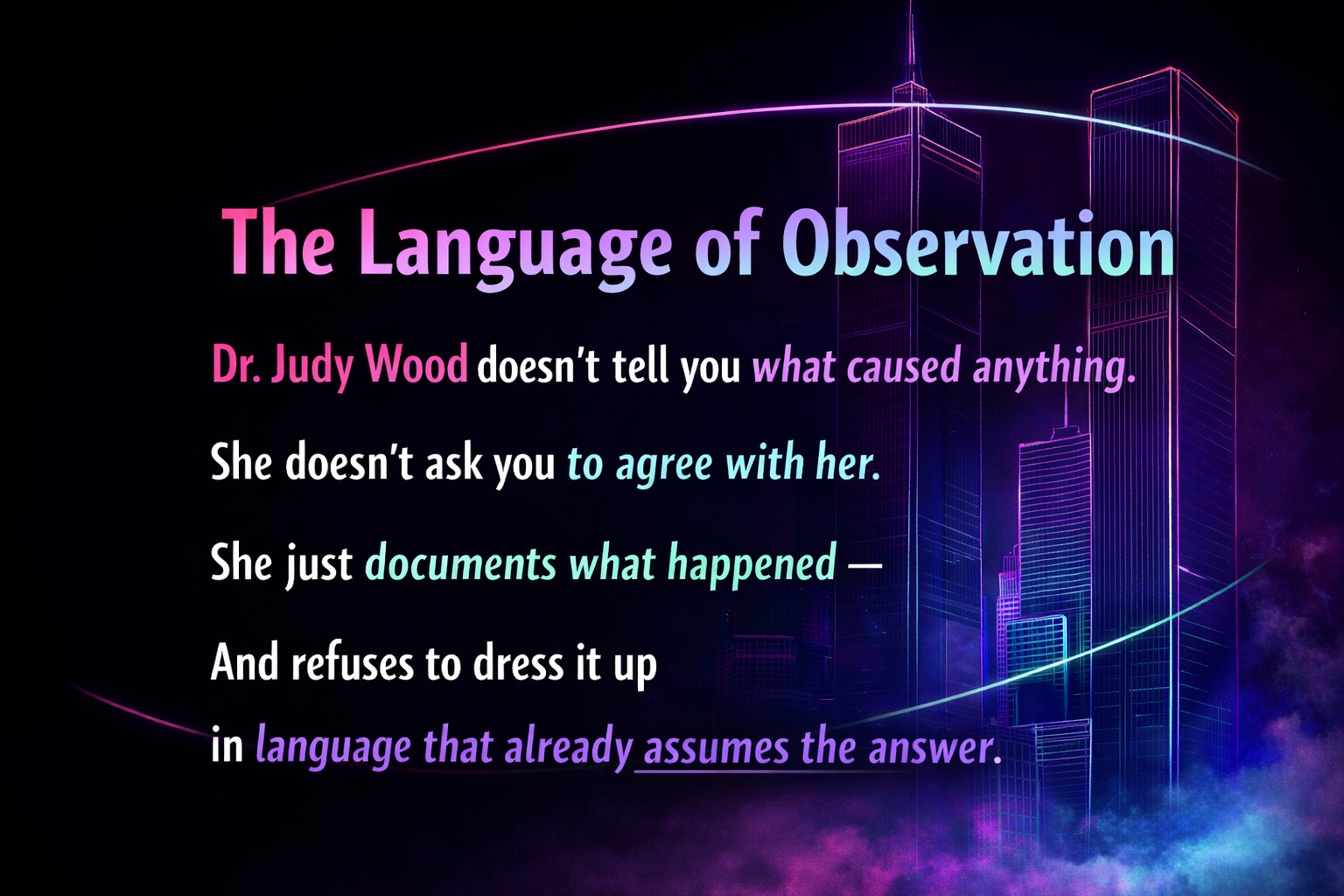
Most 9/11 discussions are about belief, debate and competing theories. Dr Wood’s approach is different. She doesn’t tell you what caused anything. She doesn’t ask you to agree with her. She just documents what happened and refuses to dress it up in a language that already assumes the answer.
The criticism usually starts with her wording and rarely reaches her evidence.
And that tells you something important about where the real problem lies.
How Language is Used to Discredit Her
Instead of addressing missing material, or the behaviour of the dust clouds, just to name a few, critics focus on her terminology. The words can be called strange, unscientific or deliberately provocative. That framing does an important job, it gives people a reason to dismiss her without ever looking at what she has documented.
This tactic works because it feels reasonable. If something sounds odd, many people assume it is odd. The discussion ends before it begins and no one has to explain why the observations don’t fit the accepted stories.
This is perception management!!
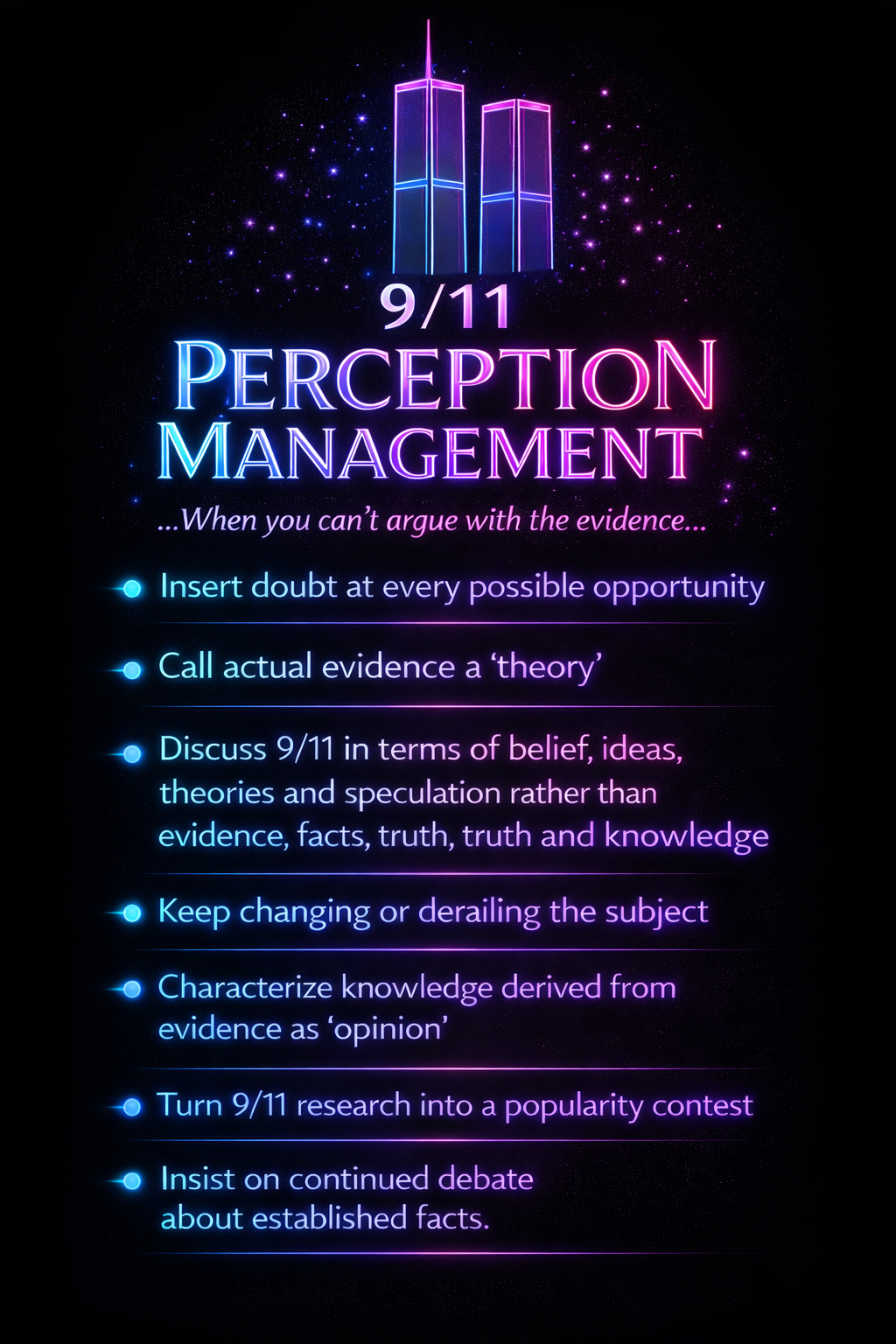
Once you recognise these tactics, it becomes easier to spot them not just in the mainstream narrative, but within the 9/11 truth movement itself.
How this Plays Out in the 9/11 Truth Movement
Once you recognise perception management tactics, you start seeing them within the 9/11 truth movement itself.
Certain language is treated as acceptable while other language quietly pushes a person outside of the conversation. Explanations framed around controlled demolition, explosives or free fall collapse are welcomed. Evidence described without a fixed mechanism is not.
Groups like Architects & Engineers for 9/11 Truth (AE911Truth) and figures such as Richard Gage, Steven Jones and James Fetzer promote specific explanatory frameworks. Evidence that doesn’t fit those frameworks is often dismissed, mocked or ignored.
As a result, Dr Wood is treated as a problem to be managed, rather than evidence to be examined.

Ridicule, Avoidance and Silence
Disagreement in research is normal. What is unusual is how often Dr Judy Wood is discredited without her evidence ever being addressed.
Instead of engaging with what she documents, which is observable evidence, the response usually falls into one of three patterns.
First is ridicule. Her terminology is mocked or exaggerated until the language itself becomes the story. Once the words sound silly, people feel justified in never looking at the data behind them.
Avoidance - Her work is left out of conferences, discussions, panels and summaries of 9/11 research, as if it simply doesn’t exist. No because it has been disproven, it is because it does not fit approved explanations.
Silence - questions go unanswered, evidence is not rebutted, her work is suppressed and the conversation moves on without her work ever being examined on its own terms.
What makes it stand out is the imbalance. Dr wood does not spend her time publicly attacking other researchers, she doesn’t mock their language or question their motives. She presents evidence and receipts and leave it there.

What This Leaves Us With
You don’t need to decide whether you agree with Dr Wood to see the issue. What matters is this…
…her work is routinely dismissed without her evidence being examined, while debates about wording, tone and credibility take its place.
Language should be a tool used for clarity, not a filter that decides which observations are allowed to exist. When unfamiliar words become grounds for dismissal, entire categories of evidence can be ignored without ever being addressed.
Dr Wood’s approach is uncomfortable because it removes certainty. It doesn’t offer a neat explanation or a finished story. It asks the reader to sit with unanswered questions and look directly at what happened before deciding what it means.
Where her work ultimately changes how 9/11 is understood or not, one things is already clear, when discussion is policed by language rather than evidence, inquiry stops.
And that should concern everyone, regardless of where they stand.
Terrific essay, well written, and spot on !!
Great article. I really like how you explain how words have meanings that when used, steer a person towards certain conclusions. Your last little video gave me the chills. Where did the towers go? Look at the dust on this car - that's the tower.